Category: News

  • Toronto Is Getting Break From The Heat Next Week With -16 C Weather

    Toronto Is Getting Break From The Heat Next Week With -16 C Weather

    After the excruciatingly hot summer months that we have gone through, Toronto is seeking to bless the masses with a rain pour soon enough, hence all the residents can now look forward to a much conducive and better environment. One can’t deny, this year has been quite a testing period for the whole wide world.

    Countless days of summer were added like a cherry on top of the cake. The city can finally look forward to some comforting weather. Considering how hot the climate has been lately, it comes to the nation as a much-needed harbinger of change, bringing about solace in the lives of a lot of people who have been dealing with the heat lately, along with an added pandemic.
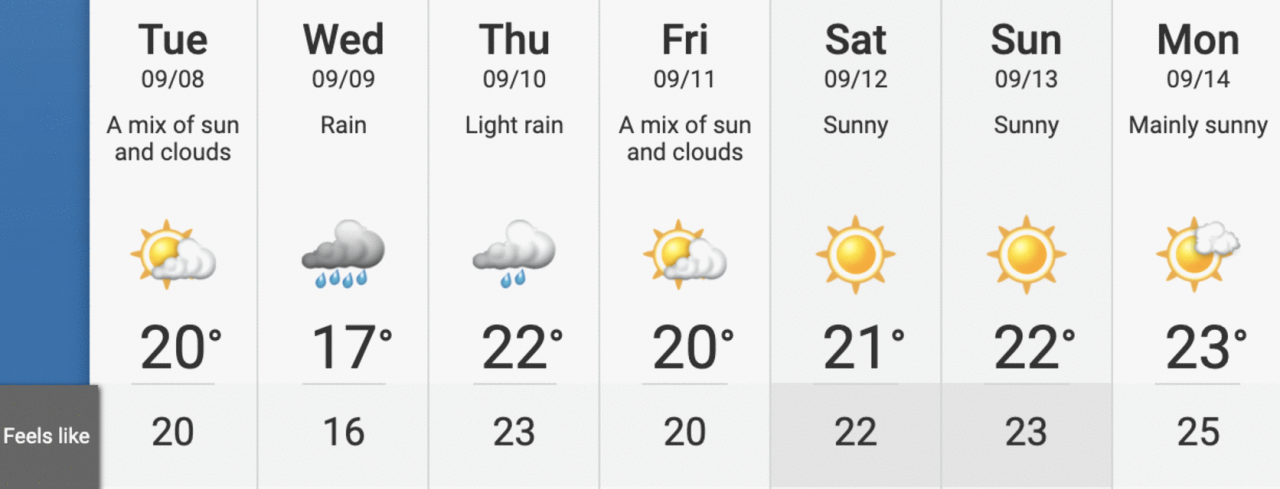


    Toronto’s weather forecast for September shows lower temperatures, as compared to the previous months. The weather network predicts a high of merely 17 C on this day, almost close to 16 C accompanied by 20-25 mm of rain.


    The weather prediction also determines that the months of September and October will bring mild 15 C days and intermittent showers! This proves to be a news of relief, considering how badly the city was boiling up.

     
    This is also a very different temperature from what Toronto has been experiencing lately, especially in the past few months. The Farmer’s Almanac also suggested that a rainy day is what is an indication of what’s in store for the weather of Toronto this fall. Let’s hope the city gets as comforting and cool as the citizens are trying to be!

  • Police disperse Brampton house party with 200+ reportedly inside

    Police disperse Brampton house party with 200+ reportedly inside

    Police and bylaw officers in Brampton, Ont. say they dispersed a house party attended by as many as 200 people on Saturday night, with organizers who tried to keep the gathering off social media and concealed from neighbours.

    The organizer also erected barriers above the home’s backyard fence so people could not see inside.

    Video posted to social media showed numerous vehicles parked on the grass near the property.

    Police said it took about an hour, until roughly midnight, to disperse the party and send everyone home.

    A spokesperson for Brampton Mayor Patrick Brown said the homeowners have been charged under the Emergency and Civil Protection Act.

  • Tour boats at Niagara Falls shows difference between U.S., Canadian approach to COVID-19

    Tour boats at Niagara Falls shows difference between U.S., Canadian approach to COVID-19

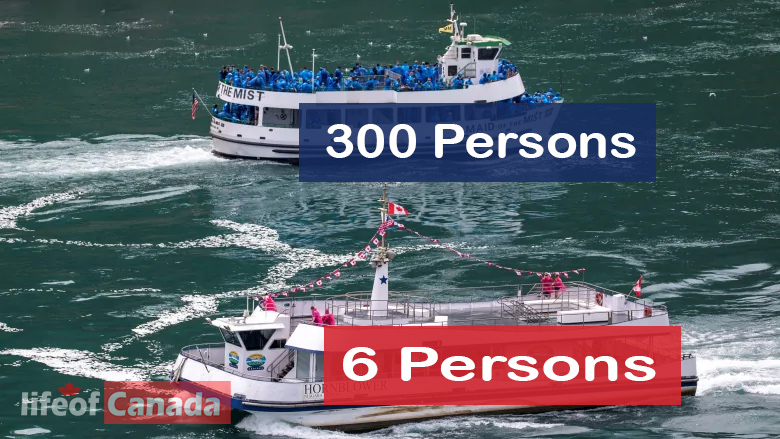
    These Images of the boats from the US and Canada Niagara fall cruising past each has caused the discussion to swell on social media, with many suggesting the stark contrast in passengers is symbolic of the difference in the Canadian and American approaches to COVID-19.

    At the famous waterfalls on the U.S.-Canadian border, Canadian ferries are limited to just six passengers per boat, out of a 700-person capacity. But on the U.S. side, the ferries are operating at 50 percent capacity, according to Maid of the Mist boat tours.

    “We actually took a picture of the [American] boat,” said Julie Pronovost, visiting from Quebec with her family on Tuesday. “I don’t find that it’s very safe to be on a boat like that. It’s much better here.”

    Tourists at the falls on Tuesday said they felt much safer with the six-person per boat limit.

    “I’m glad I’m in Canada,” said Amanda Barnes of Brampton, Ont. “You can see why the pandemic is raging in the United States and not in Canada when you look at the difference between the boats.”

  • Ontario unveils reopening plans are out : 3 Phrases

    Ontario unveils reopening plans are out : 3 Phrases

    After Saskatchewan, Ontario opening plan is here.


    “Together, Ontario will emerge from this crisis – with a clear path to economic recovery that keeps people safe and healthy.”


    PHASE ONE: PROTECT AND SUPPORT

    The first of the three phases is already underway. This phase focuses on protecting the health and well-being of individuals and families, as well as supporting frontline health-care workers. It also focuses on emergency orders put in place that shutdown non-essential workplaces, outdoor amenities at parks, recreational areas, and public places, as well as put restrictions on social gatherings.

    Ontario’s Action Plan: Responding to COVID-19 is part of this phase. The $17-billion plan was released on March 25.

    PHASE TWO: RESTART

    This phase is broken down into three stages that provide a “careful approach” to loosening emergency measures and therefore reopening Ontario’s economy, the framework states.

    During this phase, the government says public health and workplace safety “will remain the top priority,” while balancing the needs of people and businesses.

    Each of the following three stages will be monitored by health officials for two to four weeks.

    Stage one: Open select workplaces, allow some small gatherings

    •  Businesses that can “immediately meet or modify operations” to meet public health guidance, for example, those that can conduct curbside pickup or delivery
    •  Opening some outdoor spaces, such as parks, and allowing for “a greater number of individuals” to attend some events, such as funerals
    •  Hospitals begin to offer some non-urgent surgeries and other health-care services

    Stage two: Open more workplaces and outdoor spaces, allow some larger gatherings

    •  May include some service industries and additional office and retail workplaces

    Stage three: Further relax restrictions on public gathers, opening all workplaces

    •  Large public gatherings, such as concerts and sporting events will continue to be restricted for “the foreseeable future”

    After each two-to-four-week period, health officials may advise to “reapply or tighten certain public health measures,” “maintain status quo,” or “progress to the next stage.”

    “This ongoing gradual assessment of public health measures will continue until the post-pandemic period when a vaccine or treatment for COVID-19 is available.”

    PHASE THREE: RECOVER

    This phase includes Ontario transitioning to its “new normal” and will focus on creating jobs across the province while ensuring that workplaces are following strict health and safety guidelines.

    “Remote work arrangement should continue where feasible,” the province states.


  • Saskatchewan To Be First Province To Reopen Economy On May 4th

    Saskatchewan To Be First Province To Reopen Economy On May 4th

    Well, someone had to be first. Saskatchewan is implementing the first phase of its 5-phase plan to reopen the province’s economy on May 4th.

    Obviously, anyone experiencing any sort of COVID-19 symptoms is still fully expected to stay home. This “reopening” is absolutely not a complete removal of current restrictions, rather a strategic approach to jumpstart the province’s economy.

    Here is what Phase 1 of the plan will include:

    • A reopening of medical services including dentistry, optometry, physical therapy, opticians, podiatry, occupational therapy, and chiropractic treatment.
    • Low-risk outdoor activities like boating and fishing will have facilities opened
    • Campgrounds will open for booking online, camping available on June 1
    • Golf courses will be able to open with restrictions starting on May 15


    Five Phases of the Re-Open Saskatchewan Plan

    The Re-Open Saskatchewan plan consists of five phases.  The timing and order of the businesses and workplaces included in each phase is subject to change throughout the process based on a continuous assessment of transmission patterns and other factors.

    Phase One – Beginning May 4, 2020

    • The first phase of the plan includes the re-opening of medical services restricted under the current public health order, and the resumption of low-risk outdoor recreational activities, including fishing and boat launches, golf courses and a fixed date for parks and campgrounds.  The size restrictions of public and private gatherings will remain at a maximum of 10 people.
    • On May 4, public access to medical services will be reinstated, including access to dentistry, optometry, physical therapy, opticians, podiatry, occupational therapy and chiropractic treatment.  When it is not possible to physically distance, providers will be required to take precautionary measures as outlined by the Chief Medical Health Officer.
    • Low-risk outdoor recreational activities will be allowable with precautionary measures, including fishing and boat launches (May 4), golfing with physical distancing guidelines (May 15) and a fixed date (June 1) and clear guidelines for the operation of parks and campgrounds.

    Phase Two – May 19, 2020

    • The second phase of the plan includes the May 19 re-opening of retail businesses and select personal services that were previously not deemed allowable.
    • The size restrictions of public and private gatherings will remain at a maximum of 10 people.
    • A full list of retail businesses and select personal services that will be deemed allowable in phase two is included in the Re-Open Saskatchewan plan, along with guidance, protocols, and physical distancing measures that allowable businesses and services are required to observe.

    Phase Three – Date To Be Determined

    • The third phase will be implemented following an evaluation of transmission patterns of COVID-19, and does not have a pre-determined date.  The third phase will include the re-opening of remaining personal services, along with the re-opening of restaurant-type facilities, gyms and fitness facilities, licensed establishments and childcare facilities.  Capacity limits will remain in some facilities, such as limits to 50 per cent of regular capacity for restaurants and licensed establishments.
    • All businesses and customers will be expected to maintain physical distancing practices, guidelines and recommendations.
    • Other than in allowable businesses, the size of public and private gatherings will increase to a maximum of 15 people.

    Phase Four – Date To Be Determined

    •  The fourth phase will be implemented following an evaluation of transmission patterns of COVID-19, and does not have a pre-determined date.  The fourth phase will include the re-opening of indoor and outdoor recreation and entertainment facilities.
    • All businesses and customers will be expected to maintain physical distancing practices, guidelines and recommendations.
    • Other than in allowable businesses, the size of public and private gatherings will increase to a maximum of 30 people.

    Phase Five – Date To Be Determined

    •  The fifth phase will be implemented following an evaluation of transmission patterns of COVID-19 and the preceding four phases, and will include the consideration of lifting long-term restrictions.

    Monitoring Transmission of COVID-19 and Phase Advancement Criteria

    • As restrictions are gradually lifted, the Government of Saskatchewan and Dr. Saqib Shahab, Chief Medical Health Officer, will carefully monitor the daily number of reported cases and other important indicators.  These factors will inform decisions regarding the pace at which the restrictions can be lifted or put back in place if required.
    • Transmission is controlled;
    • Health system capacities are in place to test, isolate and treat every case and trace every contact;
    • Outbreak risks are minimized in special settings like health facilities and nursing homes;
    • Preventive measures are in place in workplaces, schools and other essential places;
    • Importation risks can be managed;
    • Communities are fully educated, engaged and empowered to adjust to the new norm.

    The plan will also provide clear guidance to the public so they can continue to follow current public health orders and prepare accordingly for lifting of restrictions.

    Long-Term Restrictions on High Risk Areas Remain In Place

    A number of long-term measures and restrictions that are related to the highest risk areas will remain in place for the foreseeable future.

    These long-term restrictions include:

    • Maintaining the current Provincial State of Emergency;
    • Recommendations against non-essential international and interprovincial travel;
    • Mandatory 14-day self-isolation following international travel, exposure to COVID-19, or a positive COVID-19 test;
    • Visitor restrictions limited to compassionate reasons at long-term care homes, hospitals, personal care homes and group homes;
    • The suspension of classes in all primary and secondary educational institutions, both public and private; and
    • Large public gatherings remain prohibited.

    Recommendations throughout all Phases

    • The following recommendations should remain in place through all five phases:
    • Protective measures for vulnerable populations;
    • Individuals should continue working from home if they can do so effectively;
    • Physical distancing must be maintained, wherever possible;
    • People must stay at home when they are sick;
    • Vulnerable individuals, such as seniors and those with underlying health conditions, should continue to exercise caution and minimize high-risk exposures, such as public outings;
    • Personal hygiene will continue to be a key prevention measure;
    • Enhanced cleaning and disinfection should take place in workplaces, public spaces and recreational facilities;
    • Although the public health order regarding the size of gatherings does not apply to businesses and workplaces, they are expected to follow the recommended public health measures, including: physical distancing for staff and clients; regular cleaning and disinfection; frequent handwashing and sanitizing; use of PPE where available and appropriate; and keeping staff who demonstrate or report COVID-19 symptoms out of the workplace; and
    • Long-term care and personal care homes must ensure that each staff member works in only one facility.
  • PM Trudeau announces $9B for students, they will be getting 1250$/month or more

    PM Trudeau announces $9B for students, they will be getting 1250$/month or more

    Students and recent graduates who have seen their education and job prospects hampered by the ongoing COVID-19 pandemic will soon be able to claim a new Canada Emergency Student Benefit, Prime Minister Justin Trudeau has announced, as part of a $9 billion package of new measures aimed at helping young people.

    The benefit will see eligible postsecondary students receive $1,250 a month from May to August, and if you are taking care of someone else or have a disability, that amount increases to $1,750 monthly.

    College and university students currently in school, planning to start in September, or who graduated in December 2019 are eligible.


    As well, working students earning less than $1,000 per month can apply.

    “COVID-19 has meant that there aren’t as many jobs out there for students, and without a job, it can be hard to pay for tuition or the day-to-day basics. You might normally have turned to your parents for help, but right now mom and dad are stretched, too,” Trudeau said.

    Trudeau said the benefit will require additional legislation and talks are now underway about how quickly a bill to implement this new program can be brought forward.

    In Wednesday’s update on COVID-19 measures from Rideau Cottage, Trudeau said new student jobs and grants are also on their way.

    Specifically, the federal government is also:

    •  Creating an additional 76,000 jobs for young people in sectors that need an extra hand right now, or that are on the frontlines of this pandemic which could include contact tracing or helping out on farms;
    •  Investing $291.6 million to extend scholarships, fellowships, and grants for three or four months to keep research projects and placements going, including for postdoctoral fellowships.
    •  Broadening eligibility for financial assistance and raising the maximum weekly amount that can be provided to a student in 2020-21 from $210 to $350.
    •  Launching a new Canada Student Service Grant of between $1,000 and $5,000 for students volunteering in the COVID-19 fight to go towards their fall tuition;
    •  Providing $75.2 million to specifically increase support for First Nations, Inuit, and Metis Nation students; and
    •  Doubling the Canada Student Grants for all eligible full-time students to up to $6,000 and up to $3,600 for part-time students in 2020-21.The Canada Student Grants for Students with Permanent Disabilities and Students with Dependents are also being doubled.
  • Gunman dressed as policeman kills 16 in Canada’s worst mass shooting

    Gunman dressed as policeman kills 16 in Canada’s worst mass shooting

    A gunman who dressed as a policeman killed at least 16 people, including a female police officer, in the province of Nova Scotia, Canada. The attacker was killed by the police. This is the country’s worst mass shooting as the death toll exceeded that of a Montreal massacre in 1989 when a gunman killed several women.


    The Royal Canadian Mounted Police said the gunman, 51-year-old Gabriel Wortman, who worked as a denturist, appeared at one stage to have been wearing part of a police uniform. He had also painstakingly disguised his car to look like a police cruiser.

    Wortman shot people in several locations in Nova Scotia, the RCMP told a briefing. RCMP Commissioner Brenda Lucki told the Canadian Broadcasting Corp the police knew of at least 16 victims, besides the shooter. She added there was no indication at this time that the killings were terrorism-related.

    Nova Scotia Premier Stephen McNeil decried what he called a senseless act of violence.

    Canadian Prime Minister Justin Trudeau said his government would help Nova Scotians “as they heal from this tragedy.”


  • $500 to $100,000 fines for ignoring social distancing in Brampton

    $500 to $100,000 fines for ignoring social distancing in Brampton

    The Brampton COVID-19 Emergency Measures bylaw includes regulations that:

    • Prohibit people from maintaining less than a 2.0 metre distance from one another on any public property (other than people they live with)
    • Prohibit businesses to allow people to sit or stand less than 2.0 metres apart whether inside or outside (other than people they live with)
    • Prohibit people from using any of the following City properties:
      – playgrounds and other structures in parks
      – leash-free dog parks
      – picnic shelters
      – outdoor sports facilities and outdoor fitness equipment, including sports fields, basketball and tennis courts
      – recreation centres and surrounding lands
      – parking lots

    10 additional bylaw officers will be added to support the enforcement of the new bylaws.


    Despite all parks and playgrounds in Brampton being closed since March 26, many are ignoring the signs and jumping fences to enter. Mayor Patrick Brown is hoping the threat of a heavy fine will make a difference

    “These fines will ensure that those that disrespect the advice of public health to keep us all safe – there will be consequences for those actions,” he said.

  • Canadians who were unemployed even before coronavirus: what help can they get?

    Canadians who were unemployed even before coronavirus: what help can they get?

    The Trudeau government is rolling out a 75 percent wage subsidy to help employers keep workers on the payroll through the crisis. Those who’ve already lost their income can turn to the new Canada Emergency Response Benefit (CERB), which will provide $2,000 a month for up to four months.


    Meanwhile, those who are already receiving employment insurance will continue to do so and be able to transition to the CERB if they’re unable to find work when their benefits run out due to the health emergency, according to the Department of Finance.


    It remains unclear, however, whether some of those who were already unemployed before the onset of the crisis and students about to graduate will be able to access the emergency income support.

    “It’s a huge oversight,” says David MacDonald, senior economist at the Canadian Centre for Policy Alternatives.


    Some government sources have indicated some students would be able to apply for the CERB. In an update to her website on Friday, federal cabinet minister Maryam Monsef said students who’ve earned $5,000 in the past year would qualify for the aid.

    The government’s Emergency Response Act, which introduced the CERB, says workers must have had income of at least $5,000 in 2019 or in the 12-month period preceding their application in order to qualify. The income must have come from employment, self-employment or EI or Quebec maternity and parental benefits.

    That’s good news for students who’ve managed to hold on to part-time jobs while in school, MacDonald says. But, he adds, what about the new graduates who have a job offer lined up for May that may unravel amid the current economic cataclysm?


  • #BoycottTimHortons Trends as Employee Receives Notice ‘I expect you to show up’  After Sick Note.

    #BoycottTimHortons Trends as Employee Receives Notice ‘I expect you to show up’ After Sick Note.


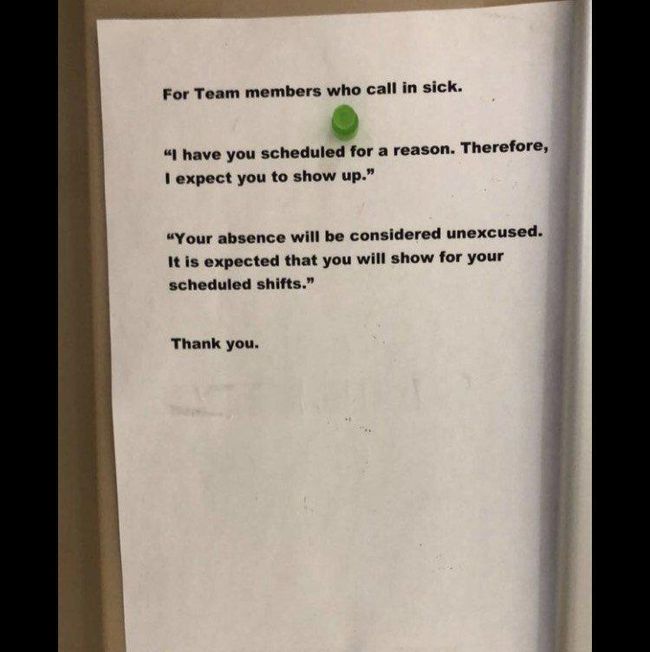
    Tim Hortons is facing a lot of criticism after note warning employees over sickness at an Edmonton location posted online.”For team members who call in sick, I have you scheduled for a reason. Therefore, I expect you to show up,” read the note, which was posted to Reddit on Monday.


    The whole world is fighting with Coronavirus and all over Canada people have been asked to stay at home if they don’t feel well. Public health officials in Alberta asked people to strict social distancing and self-isolation policies, at times pleading with people to stay home if they’re sick.


    “We have been in contact with the restaurant owner and they have removed the sign and have reiterated to their employees the policy, which is clear — team members should always stay home if they are sick.”

    After it was posted to Reddit, the photo of the note received hundreds of comments. The photo has since been deleted from the post.