Blog

  • Around 70,000 Summer Jobs Posted by The Government of Canada

    Around 70,000 Summer Jobs Posted by The Government of Canada

    The Government of Canada has listed around 70k jobs in its portal.

    Today, the Canada Summer Jobs (CSJ) 2020 officially taken a step, with the goal of providing thousands of summer jobs to Canadians aged 15 to 31. If you were looking for a way to earn some cash this summer, look no further


    The Canadian government wants to help you find a job and you can use the job bank portal to see the newly listed jobs and can also find the special COVID 19 essential jobs.


    Login at this job search portal and start finding a job for you now.

  • Video of A Father & Son In Tim Horton’s Drive-Thru In A Mini-Car Goes Viral

    Video of A Father & Son In Tim Horton’s Drive-Thru In A Mini-Car Goes Viral

    Ready for your daily dose of wholesome content? Tik Tok-er E. Mercades caught probably the cutest video we’ve ever seen while waiting in line at an Alberta Tim Hortons drive-thru.

    The video is only seconds long but shows what we’re assuming to be a father and son powering through the take-out line in a luxe mini-vehicle, and it has us in tears.


    @em199519

    Cutest thing I have ever seen #cute #littlekid #funny #foryoupage #foryou #keepingactive #coronatime #quarantine #hilarious #timhortonscanada

    ♬ You Got A Friend In Me (From “Toy Story”) (Karaoke Version) – Urock Karaoke


  • Ontario unveils reopening plans are out : 3 Phrases

    Ontario unveils reopening plans are out : 3 Phrases

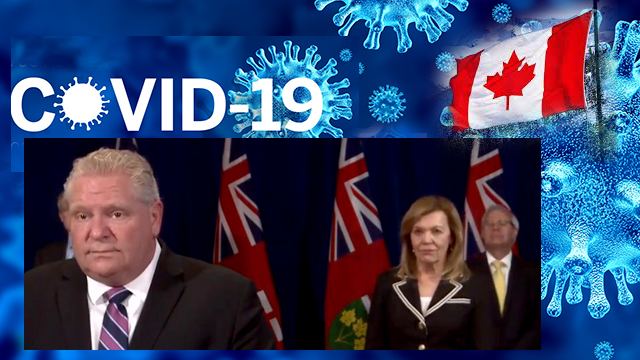
    After Saskatchewan, Ontario opening plan is here.


    “Together, Ontario will emerge from this crisis – with a clear path to economic recovery that keeps people safe and healthy.”


    PHASE ONE: PROTECT AND SUPPORT

    The first of the three phases is already underway. This phase focuses on protecting the health and well-being of individuals and families, as well as supporting frontline health-care workers. It also focuses on emergency orders put in place that shutdown non-essential workplaces, outdoor amenities at parks, recreational areas, and public places, as well as put restrictions on social gatherings.

    Ontario’s Action Plan: Responding to COVID-19 is part of this phase. The $17-billion plan was released on March 25.

    PHASE TWO: RESTART

    This phase is broken down into three stages that provide a “careful approach” to loosening emergency measures and therefore reopening Ontario’s economy, the framework states.

    During this phase, the government says public health and workplace safety “will remain the top priority,” while balancing the needs of people and businesses.

    Each of the following three stages will be monitored by health officials for two to four weeks.

    Stage one: Open select workplaces, allow some small gatherings

    •  Businesses that can “immediately meet or modify operations” to meet public health guidance, for example, those that can conduct curbside pickup or delivery
    •  Opening some outdoor spaces, such as parks, and allowing for “a greater number of individuals” to attend some events, such as funerals
    •  Hospitals begin to offer some non-urgent surgeries and other health-care services

    Stage two: Open more workplaces and outdoor spaces, allow some larger gatherings

    •  May include some service industries and additional office and retail workplaces

    Stage three: Further relax restrictions on public gathers, opening all workplaces

    •  Large public gatherings, such as concerts and sporting events will continue to be restricted for “the foreseeable future”

    After each two-to-four-week period, health officials may advise to “reapply or tighten certain public health measures,” “maintain status quo,” or “progress to the next stage.”

    “This ongoing gradual assessment of public health measures will continue until the post-pandemic period when a vaccine or treatment for COVID-19 is available.”

    PHASE THREE: RECOVER

    This phase includes Ontario transitioning to its “new normal” and will focus on creating jobs across the province while ensuring that workplaces are following strict health and safety guidelines.

    “Remote work arrangement should continue where feasible,” the province states.


  • Saskatchewan To Be First Province To Reopen Economy On May 4th

    Saskatchewan To Be First Province To Reopen Economy On May 4th

    Well, someone had to be first. Saskatchewan is implementing the first phase of its 5-phase plan to reopen the province’s economy on May 4th.

    Obviously, anyone experiencing any sort of COVID-19 symptoms is still fully expected to stay home. This “reopening” is absolutely not a complete removal of current restrictions, rather a strategic approach to jumpstart the province’s economy.

    Here is what Phase 1 of the plan will include:

    • A reopening of medical services including dentistry, optometry, physical therapy, opticians, podiatry, occupational therapy, and chiropractic treatment.
    • Low-risk outdoor activities like boating and fishing will have facilities opened
    • Campgrounds will open for booking online, camping available on June 1
    • Golf courses will be able to open with restrictions starting on May 15


    Five Phases of the Re-Open Saskatchewan Plan

    The Re-Open Saskatchewan plan consists of five phases.  The timing and order of the businesses and workplaces included in each phase is subject to change throughout the process based on a continuous assessment of transmission patterns and other factors.

    Phase One – Beginning May 4, 2020

    • The first phase of the plan includes the re-opening of medical services restricted under the current public health order, and the resumption of low-risk outdoor recreational activities, including fishing and boat launches, golf courses and a fixed date for parks and campgrounds.  The size restrictions of public and private gatherings will remain at a maximum of 10 people.
    • On May 4, public access to medical services will be reinstated, including access to dentistry, optometry, physical therapy, opticians, podiatry, occupational therapy and chiropractic treatment.  When it is not possible to physically distance, providers will be required to take precautionary measures as outlined by the Chief Medical Health Officer.
    • Low-risk outdoor recreational activities will be allowable with precautionary measures, including fishing and boat launches (May 4), golfing with physical distancing guidelines (May 15) and a fixed date (June 1) and clear guidelines for the operation of parks and campgrounds.

    Phase Two – May 19, 2020

    • The second phase of the plan includes the May 19 re-opening of retail businesses and select personal services that were previously not deemed allowable.
    • The size restrictions of public and private gatherings will remain at a maximum of 10 people.
    • A full list of retail businesses and select personal services that will be deemed allowable in phase two is included in the Re-Open Saskatchewan plan, along with guidance, protocols, and physical distancing measures that allowable businesses and services are required to observe.

    Phase Three – Date To Be Determined

    • The third phase will be implemented following an evaluation of transmission patterns of COVID-19, and does not have a pre-determined date.  The third phase will include the re-opening of remaining personal services, along with the re-opening of restaurant-type facilities, gyms and fitness facilities, licensed establishments and childcare facilities.  Capacity limits will remain in some facilities, such as limits to 50 per cent of regular capacity for restaurants and licensed establishments.
    • All businesses and customers will be expected to maintain physical distancing practices, guidelines and recommendations.
    • Other than in allowable businesses, the size of public and private gatherings will increase to a maximum of 15 people.

    Phase Four – Date To Be Determined

    •  The fourth phase will be implemented following an evaluation of transmission patterns of COVID-19, and does not have a pre-determined date.  The fourth phase will include the re-opening of indoor and outdoor recreation and entertainment facilities.
    • All businesses and customers will be expected to maintain physical distancing practices, guidelines and recommendations.
    • Other than in allowable businesses, the size of public and private gatherings will increase to a maximum of 30 people.

    Phase Five – Date To Be Determined

    •  The fifth phase will be implemented following an evaluation of transmission patterns of COVID-19 and the preceding four phases, and will include the consideration of lifting long-term restrictions.

    Monitoring Transmission of COVID-19 and Phase Advancement Criteria

    • As restrictions are gradually lifted, the Government of Saskatchewan and Dr. Saqib Shahab, Chief Medical Health Officer, will carefully monitor the daily number of reported cases and other important indicators.  These factors will inform decisions regarding the pace at which the restrictions can be lifted or put back in place if required.
    • Transmission is controlled;
    • Health system capacities are in place to test, isolate and treat every case and trace every contact;
    • Outbreak risks are minimized in special settings like health facilities and nursing homes;
    • Preventive measures are in place in workplaces, schools and other essential places;
    • Importation risks can be managed;
    • Communities are fully educated, engaged and empowered to adjust to the new norm.

    The plan will also provide clear guidance to the public so they can continue to follow current public health orders and prepare accordingly for lifting of restrictions.

    Long-Term Restrictions on High Risk Areas Remain In Place

    A number of long-term measures and restrictions that are related to the highest risk areas will remain in place for the foreseeable future.

    These long-term restrictions include:

    • Maintaining the current Provincial State of Emergency;
    • Recommendations against non-essential international and interprovincial travel;
    • Mandatory 14-day self-isolation following international travel, exposure to COVID-19, or a positive COVID-19 test;
    • Visitor restrictions limited to compassionate reasons at long-term care homes, hospitals, personal care homes and group homes;
    • The suspension of classes in all primary and secondary educational institutions, both public and private; and
    • Large public gatherings remain prohibited.

    Recommendations throughout all Phases

    • The following recommendations should remain in place through all five phases:
    • Protective measures for vulnerable populations;
    • Individuals should continue working from home if they can do so effectively;
    • Physical distancing must be maintained, wherever possible;
    • People must stay at home when they are sick;
    • Vulnerable individuals, such as seniors and those with underlying health conditions, should continue to exercise caution and minimize high-risk exposures, such as public outings;
    • Personal hygiene will continue to be a key prevention measure;
    • Enhanced cleaning and disinfection should take place in workplaces, public spaces and recreational facilities;
    • Although the public health order regarding the size of gatherings does not apply to businesses and workplaces, they are expected to follow the recommended public health measures, including: physical distancing for staff and clients; regular cleaning and disinfection; frequent handwashing and sanitizing; use of PPE where available and appropriate; and keeping staff who demonstrate or report COVID-19 symptoms out of the workplace; and
    • Long-term care and personal care homes must ensure that each staff member works in only one facility.
  • PM Trudeau announces $9B for students, they will be getting 1250$/month or more

    PM Trudeau announces $9B for students, they will be getting 1250$/month or more

    Students and recent graduates who have seen their education and job prospects hampered by the ongoing COVID-19 pandemic will soon be able to claim a new Canada Emergency Student Benefit, Prime Minister Justin Trudeau has announced, as part of a $9 billion package of new measures aimed at helping young people.

    The benefit will see eligible postsecondary students receive $1,250 a month from May to August, and if you are taking care of someone else or have a disability, that amount increases to $1,750 monthly.

    College and university students currently in school, planning to start in September, or who graduated in December 2019 are eligible.


    As well, working students earning less than $1,000 per month can apply.

    “COVID-19 has meant that there aren’t as many jobs out there for students, and without a job, it can be hard to pay for tuition or the day-to-day basics. You might normally have turned to your parents for help, but right now mom and dad are stretched, too,” Trudeau said.

    Trudeau said the benefit will require additional legislation and talks are now underway about how quickly a bill to implement this new program can be brought forward.

    In Wednesday’s update on COVID-19 measures from Rideau Cottage, Trudeau said new student jobs and grants are also on their way.

    Specifically, the federal government is also:

    •  Creating an additional 76,000 jobs for young people in sectors that need an extra hand right now, or that are on the frontlines of this pandemic which could include contact tracing or helping out on farms;
    •  Investing $291.6 million to extend scholarships, fellowships, and grants for three or four months to keep research projects and placements going, including for postdoctoral fellowships.
    •  Broadening eligibility for financial assistance and raising the maximum weekly amount that can be provided to a student in 2020-21 from $210 to $350.
    •  Launching a new Canada Student Service Grant of between $1,000 and $5,000 for students volunteering in the COVID-19 fight to go towards their fall tuition;
    •  Providing $75.2 million to specifically increase support for First Nations, Inuit, and Metis Nation students; and
    •  Doubling the Canada Student Grants for all eligible full-time students to up to $6,000 and up to $3,600 for part-time students in 2020-21.The Canada Student Grants for Students with Permanent Disabilities and Students with Dependents are also being doubled.
  • Gunman dressed as policeman kills 16 in Canada’s worst mass shooting

    Gunman dressed as policeman kills 16 in Canada’s worst mass shooting

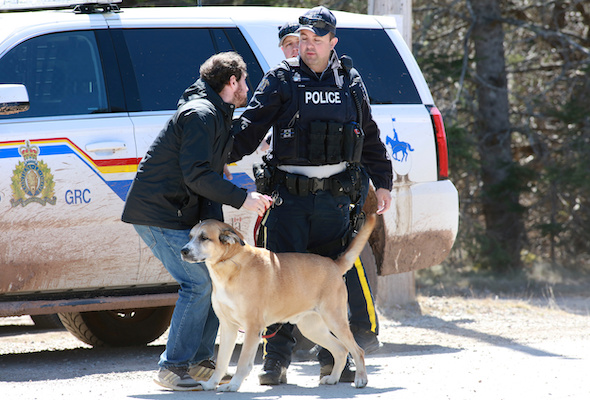
    A gunman who dressed as a policeman killed at least 16 people, including a female police officer, in the province of Nova Scotia, Canada. The attacker was killed by the police. This is the country’s worst mass shooting as the death toll exceeded that of a Montreal massacre in 1989 when a gunman killed several women.


    The Royal Canadian Mounted Police said the gunman, 51-year-old Gabriel Wortman, who worked as a denturist, appeared at one stage to have been wearing part of a police uniform. He had also painstakingly disguised his car to look like a police cruiser.

    Wortman shot people in several locations in Nova Scotia, the RCMP told a briefing. RCMP Commissioner Brenda Lucki told the Canadian Broadcasting Corp the police knew of at least 16 victims, besides the shooter. She added there was no indication at this time that the killings were terrorism-related.

    Nova Scotia Premier Stephen McNeil decried what he called a senseless act of violence.

    Canadian Prime Minister Justin Trudeau said his government would help Nova Scotians “as they heal from this tragedy.”


  • $500 to $100,000 fines for ignoring social distancing in Brampton

    $500 to $100,000 fines for ignoring social distancing in Brampton

    The Brampton COVID-19 Emergency Measures bylaw includes regulations that:

    • Prohibit people from maintaining less than a 2.0 metre distance from one another on any public property (other than people they live with)
    • Prohibit businesses to allow people to sit or stand less than 2.0 metres apart whether inside or outside (other than people they live with)
    • Prohibit people from using any of the following City properties:
      – playgrounds and other structures in parks
      – leash-free dog parks
      – picnic shelters
      – outdoor sports facilities and outdoor fitness equipment, including sports fields, basketball and tennis courts
      – recreation centres and surrounding lands
      – parking lots

    10 additional bylaw officers will be added to support the enforcement of the new bylaws.


    Despite all parks and playgrounds in Brampton being closed since March 26, many are ignoring the signs and jumping fences to enter. Mayor Patrick Brown is hoping the threat of a heavy fine will make a difference

    “These fines will ensure that those that disrespect the advice of public health to keep us all safe – there will be consequences for those actions,” he said.

  • Canadians who were unemployed even before coronavirus: what help can they get?

    Canadians who were unemployed even before coronavirus: what help can they get?

    The Trudeau government is rolling out a 75 percent wage subsidy to help employers keep workers on the payroll through the crisis. Those who’ve already lost their income can turn to the new Canada Emergency Response Benefit (CERB), which will provide $2,000 a month for up to four months.


    Meanwhile, those who are already receiving employment insurance will continue to do so and be able to transition to the CERB if they’re unable to find work when their benefits run out due to the health emergency, according to the Department of Finance.


    It remains unclear, however, whether some of those who were already unemployed before the onset of the crisis and students about to graduate will be able to access the emergency income support.

    “It’s a huge oversight,” says David MacDonald, senior economist at the Canadian Centre for Policy Alternatives.


    Some government sources have indicated some students would be able to apply for the CERB. In an update to her website on Friday, federal cabinet minister Maryam Monsef said students who’ve earned $5,000 in the past year would qualify for the aid.

    The government’s Emergency Response Act, which introduced the CERB, says workers must have had income of at least $5,000 in 2019 or in the 12-month period preceding their application in order to qualify. The income must have come from employment, self-employment or EI or Quebec maternity and parental benefits.

    That’s good news for students who’ve managed to hold on to part-time jobs while in school, MacDonald says. But, he adds, what about the new graduates who have a job offer lined up for May that may unravel amid the current economic cataclysm?


  • ALL YOU NEED TO KNOW ABOUT THE NOVEL CORONAVIRUS

    Coronavirus has quite suggestively brought down the world to its knees. Major countries across the globe are trying their level best to protect their citizens from catching the infection. While the situation in Italy, France, Iran, China, and other widely infected countries can be very heartbreaking, they have caused also caused a wide-scale panic among people. With entire nations locked down, there is absolutely no global, or intranational mobility, and the people across the world have compulsorily locked themselves up in their homes to stay safe and prevent the spread of this pandemic. Since very little was initially known about the virus, and the global collective efforts are aimed at containing the pandemic as opposed to researching about the virus in detail, there is a lot of misinformation about the disease, the virus, it’s, symptoms, prevention methods, etc. which has contributed to widespread mass hysteria.

    In light of the recent events, it is not only absolutely necessary to quarantine yourself and your family but also to check the credibility of the information that you come across. This article is a comprehensive capsule of all the information that you might need to understand the disease better and to subsequently prevent it.

    WHAT IS THE CORONAVIRUS:

    Coronaviruses are a large family of viruses that may cause illness in animals or humans.  In humans, several coronaviruses are known to cause respiratory infections ranging from the common cold to more severe diseases such as Middle East Respiratory Syndrome (MERS) and Severe Acute Respiratory Syndrome (SARS). The most recently discovered coronavirus causes coronavirus disease COVID-19. This virus belongs to the family of the SARS (Severe Acute Respiratory Syndrome) viruses and is the second type of coronavirus under this family. A previous coronavirus had emerged in the early 2000s but was neither as fatal nor as widespread as this. The virus that causes COVID-19 and the one that caused the outbreak of Severe Acute Respiratory Syndrome (SARS) in 2003 are related to each other genetically, but the diseases they cause are quite different. SARS was more deadly but much less infectious than COVID-19. There have been no outbreaks of SARS anywhere in the world since 2003.

    The virus has been named as the SARS-COV2, and the disease caused by it is called the COVID-19, or the Coronavirus Disease of 2019. The virus is supposed to have emerged in the wet markets of Wuhan, China, and according to experts, it has been around for a while. The virus started causing trouble in around November last year, and the outbreak in China began in December 2019 (hence naming the virus after the year in which it surfaced.)

    HOW DOES IT SPREAD: 

    Unlike measles, the coronavirus is not known to be airborne. It primarily spreads through contact between the infected person and another healthy person. When an infected person sneezes or coughs, the particles of his saliva transmit the virus. This is the reason why respiratory etiquette, ie, covering the mouth while coughing or sneezing is being so stressed upon. These droplets land on objects and surfaces around the person. Other people then catch COVID-19 by touching these objects or surfaces, then touching their eyes, nose or mouth. People can also catch COVID-19 if they breathe in droplets from a person with COVID-19 who coughs out or exhales droplets. This is why it is important to stay more than 1 meter (3 feet) away from a person who is sick. It is not certain how long the virus that causes COVID-19 survives on surfaces, but it seems to behave like other coronaviruses. Studies suggest that coronaviruses (including preliminary information on the COVID-19 virus) may persist on surfaces for a few hours or up to several days. This may vary under different conditions (e.g. type of surface, temperature or humidity of the environment).

    WHAT ARE THE SYMPTOMS OF COVID-19:

    There is widespread ambiguity about the symptoms of the coronavirus. These symptoms are usually mild and begin gradually. Some people become infected but don’t develop any symptoms and don’t feel unwell. Most people (about 80%) recover from the disease without needing special treatment. Around 1 out of every 6 people who get COVID-19 becomes seriously ill and develops difficulty breathing. Older people, and those with underlying medical problems like high blood pressure, heart problems or diabetes, are more likely to develop serious illness. People with fever, cough and difficulty breathing should seek medical attention. While the virus has shown to be life-threatening among the elderly, people of all age groups are susceptible to contact the disease, although in younger people, the virus causes mostly mild infection. Persons with pre-existing medical conditions (such as high blood pressure, heart disease, lung disease, cancer or diabetes)  appear to develop serious illness more often than others. The incubation period is estimated to be around 1-14 days, with 5 days being the most common However, there have been a few isolated cases where symptoms started to show after as many as 27 days.

    The most common symptoms include:

    1. Fever
    2. Tiredness
    3. Dry cough

    Certain rare symptoms include:

    1. Aches and pains
    2. Nasal congestion
    3. Runny nose
    4. Diarrhea
    5. Sore throat

    IS THERE ANY AVAILABLE TREATMENT?

    While the global effort is aimed at finding a quick cure to the disease, and the first shot of the test vaccine has been administered to a volunteer in America, there is still no definitive cure for the disease known to medical science. Doctors all over the world are trying medicines to manly contain and cure the symptoms, which has proven fruitful in a number of cases so far. People are largely relying on traditional and home remedies to alleviate the symptoms as well. As of now, there is no evidence that a present medicine or set of medicines is a definitive cure. Antibiotics do not work against viruses, they only work on bacterial infections. COVID-19 is caused by a virus, so antibiotics do not work. Antibiotics should not be used as a means of prevention or treatment of COVID-19. They should only be used as directed by a physician to treat a bacterial infection.

    Due to the lack of information about the cure, and the ease of transmission of the disease, all tested and suspected patients are hospitalized and kept in isolation, where they are monitored, and treatment is provided to them.

    HOW TO PREVENT CATCHING THE VIRUS:

    Since the virus is known to transmit through contact, it is best to stay away from crowded places, or where you may come in contact with a large gathering of people. With the recent lockdowns and widespread self-quarantine, the majority of public places have been shut down. It is still very important to practice social distancing from neighbors, even family members if they start showing symptoms. If you have come in recent contact with someone who has returned from one of the infected countries or places, it is highly advised to practice self-isolation and get yourself checked immediately in case you show symptoms.

    To prevent infection and to slow transmission of COVID-19, do the following:

    • Wash your hands regularly with soap and water, or clean them with alcohol-based hand rub.
    • Maintain at least 1-metre distance between you and people coughing or sneezing.
    • Avoid touching your face.
    • Cover your mouth and nose when coughing or sneezing.
    • Stay home if you feel unwell.
    • Refrain from smoking and other activities that weaken the lungs.
    • Practice physical distancing by avoiding unnecessary travel and staying away from large groups of people.

    While the lack of more information is the main reason for the global alarm and confusion, we know enough to keep ourselves and our families safe and healthy. These times have taken a toll on the mental well-being of many people as well, and people are reporting depression and anxiety caused due to the situation. It is therefore of utmost importance to filter the information that reaches us and use it to educate ourselves instead of creating fear. It is only through high levels of personal hygienes, self-care, co-operation with the government and health care specialists that we can battle this virus successfully.

  • Somebody Look !! Life of a International Student in Canada amid Covid-19

    Somebody Look !! Life of a International Student in Canada amid Covid-19

    Canada, a country of dreams for many young people around the world, especially for Indians. Nowadays, the world is fighting with something very unusual, things which we used to see in the movies where everything is lockdown and going out from home means risking our lives.

    Like every year, lots of people have migrated to Canada this year with new dreams in a beautiful country and now facing completely unexpected situations. I, Manpreet Singh is one of those who came here enrolled in Humber College, was desperately waiting for summers so that I can start exploring places and do part-time jobs to help my expenses. Now, April is about to come and life has seen a complete upside-down throughout the world.

    I know everyone is facing a bad time, no one has any idea about what is going to be next but do you know what is worst for the International students?

    First living alone in such a hard time where the family is 7000 miles away facing such a situation all alone with worries about us. Secondly, colleges/universities are closed and courses have moved online. Imagine students spent a lot of money coming sofar and study in a new environment, end up studying online in a completely locked space. So now we students are paying a lot of rent, groceries, college fees, just for staying in the room and studying online dar from family. So depressing right !!

    Not just that, as we are students, living in a shared space so chances of getting a virus are way too high. Further life has become so depressingly that even when my head pains I feel like I am the victim, and to make it worst, I am all alone having no idea about the procedure to go and test my self. I have no idea what documents I will have to bring for a test, how much money I will end up spending and end up asking for claims. Yes, that’s the moment when I feel why did I come here and I literally don’t want to discuss that with my family as they will get scared. I want them to feel I am fine and strong here so that they can just think about taking care of them.


    I know the situation is tough for everyone, not just us, I know Govt is doing a lot to support but are they thinking about International students? Do they have any idea what they are going through? They need to pay rent, pay fees, buy groceries and survive. No such notice as anything they are going to do to help them survive seems like all they care is about Canadians only or people who are well settled here. I have heard nothing like they are going to do for us financially or even taken any step to make health checkups easy for us. I just want them to know, International students have helped a lot to grow this country and even if they don’t care about us due to our current status, even then just be selfish and remember if we will have to go out and work and Canadians will not, still that won’t help Govt to reduce the spread. Because probably I will be joining a job soon, I actually joined it, they selected me and called me for orientation which I had to cancel due to advice by Govt to stay home.


    I don’t know what’s next but hoping everything will be under control soon and things will get better for everyone. So if anybody feels like helping me in this situation, feel free to donate anything. Even 5$ is appreciated. Click Here to donate.  or Send at Paypal


    Just be safe, keep your self clean.